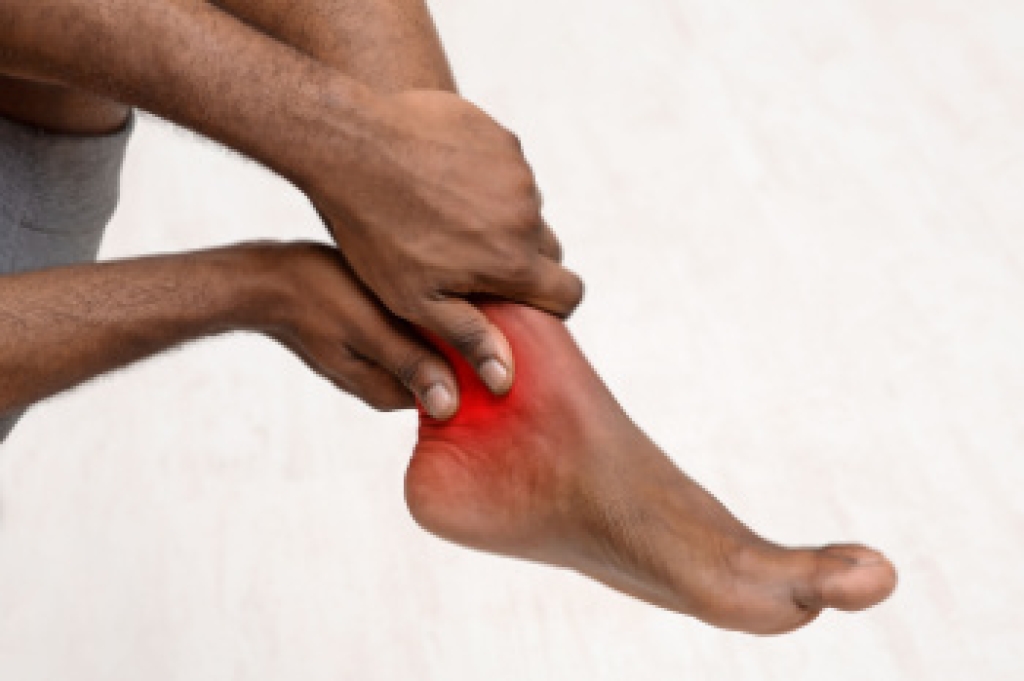
Gout is a painful joint condition that develops when excess uric acid in the body forms sharp crystals inside a joint, most commonly in the big toe. A gout attack often begins suddenly, and may wake a person during the night with intense throbbing pain, swelling, and extreme tenderness. The joint can look red, shiny, and feel hot to the touch, making even the pressure of a bedsheet uncomfortable. Some patients also notice stiffness or difficulty walking during a flare-up. Gout may be linked to kidney function, dehydration, certain medications, family history, or diets high in purines found in foods such as red meat and shellfish. Repeated attacks can lead to lasting joint damage if the condition is not properly managed. A podiatrist can help recognize the signs of gout, evaluate the affected joint, and recommend treatment to reduce inflammation and improve comfort. If you have symptoms of gout, it is suggested that you schedule an appointment with a podiatrist for effective relief and prevention solutions.
Gout is a painful condition that can be treated. If you are seeking treatment, contact Soorena Sadri, DPM from FootWorx Active Podiatry. Our doctor will treat your foot and ankle needs.
What Is Gout?
Gout is a form of arthritis that is characterized by sudden, severe attacks of pain, redness, and tenderness in the joints. The condition usually affects the joint at the base of the big toe. A gout attack can occur at any random time, such as the middle of the night while you are asleep.
Symptoms
- Intense Joint Pain - Usually around the large joint of your big toe, and it most severe within the first four to twelve hours
- Lingering Discomfort - Joint discomfort may last from a few days to a few weeks
- Inflammation and Redness -Affected joints may become swollen, tender, warm and red
- Limited Range of Motion - May experience a decrease in joint mobility
Risk Factors
- Genetics - If family members have gout, you’re more likely to have it
- Medications - Diuretic medications can raise uric acid levels
- Gender/Age - Gout is more common in men until the age of 60. It is believed that estrogen protects women until that point
- Diet - Eating red meat and shellfish increases your risk
- Alcohol - Having more than two alcoholic drinks per day increases your risk
- Obesity - Obese people are at a higher risk for gout
Prior to visiting your podiatrist to receive treatment for gout, there are a few things you should do beforehand. If you have gout you should write down your symptoms--including when they started and how often you experience them, important medical information you may have, and any questions you may have. Writing down these three things will help your podiatrist in assessing your specific situation so that he or she may provide the best route of treatment for you.
If you have any questions, please feel free to contact our office located in Fort Myers, FL . We offer the newest diagnostic and treatment technologies for all your foot care needs.